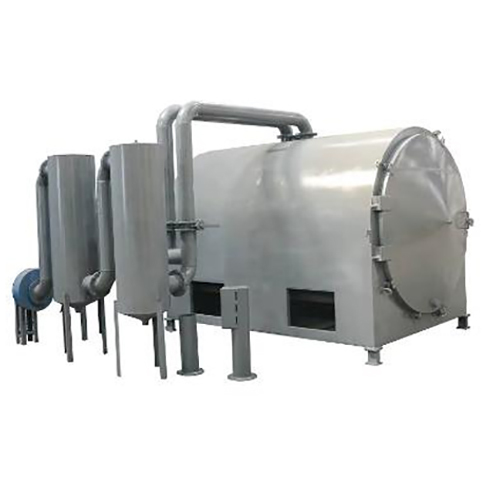
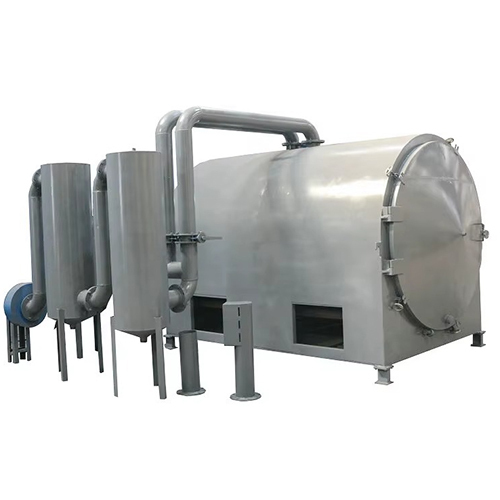
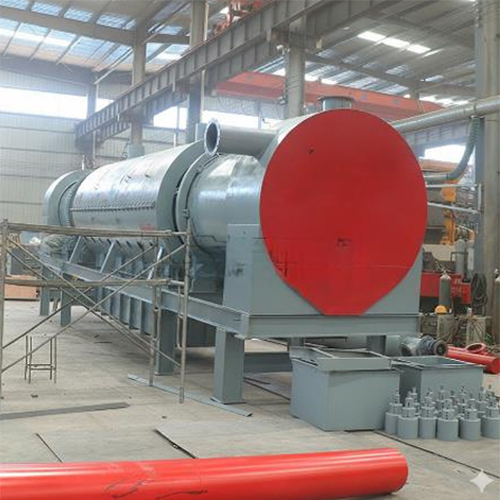
About Biocharcoal Making Plant (Batch Type)
- TYPE : EQUIPPED WITH SMOKE PURIFICATION SYSTEM
- MODEL : CJL-1000
- INTERNAL DIMENSION : 1.5 *3*12 M
- EXTERNAL DIMENSION : 3.3*1.8*2.4 M
- MATERIAL : BOILER STEEL
- CAPACITY : 1 TO 1.5 TON /BATCH
- BATCH - 24 Hrs. to 36 Hrs. ( According to Raw material )
Efficient Biochar Production from Diverse FeedstocksThe BPC-BT2000 adapts to a variety of feedstocks-from wood and coconut shells to sawdust and other biomass waste-enabling users to convert agricultural by-products into valuable biochar. Its robust rotary kiln and indirect heating system ensure high conversion efficiency above 90%, while the system's capacity of 1-2 tons per day provides versatility for farms, plantations, and agro-processing units seeking sustainable waste management.
High Safety Standards and Robust DesignEquipped with a pressure relief valve, emergency stop, and multi-layer ceramic wool insulation, the BPC-BT2000 upholds stringent operational safety. Its mild steel construction and powder-coated finish enhance longevity and resistance to wear. Designed for semi-automatic operations, the machine requires only 2-3 staff members per batch, making it practical and cost-effective for daily use.
Advanced Emissions and Filtration SystemThe plant integrates cyclone separators and scrubbers for effective fume filtration, ensuring emissions consistently meet CPCB norms. Whether operating on furnace oil or wood gas, the BPC-BT2000 guarantees low environmental impact, allowing units to comply with environmental standards while producing quality biochar for agricultural or fuel applications.
FAQ's of Biocharcoal Making Plant (Batch Type):
Q: How does the BPC-BT2000 Biocharcoal Making Plant convert biomass into charcoal?
A: The plant utilizes a batch-type rotary kiln with indirect heating to carbonize feedstock like wood, coconut shell, and sawdust. The controlled environment, maintained at 350C to 700C, facilitates efficient pyrolysis, yielding 30-35% charcoal based on feedstock quality, all while containing fumes via integrated filtration systems.
Q: What types of feedstock can be used, and is there a moisture requirement?
A: The BPC-BT2000 accommodates wood, coconut shells, sawdust, and other biomass waste, provided the feedstock moisture content is below 15%. This ensures optimal yield and efficient processing throughout each batch cycle.
Q: When and how often should the plant be operated for best results?
A: Each batch cycle takes approximately 6-8 hours, producing up to 1,500 kg of charcoal. For optimal efficiency, daily operation is recommended, depending on feedstock availability and desired production rates.
Q: Where does the plant meet safety and emission standards?
A: The BPC-BT2000 includes safety features like pressure relief valves and emergency stops, while its emission control system (cyclone and scrubber) ensures output consistently complies with CPCB regulations in India.
Q: What is the installation process, and are guidelines provided?
A: A suitable foundation is required for installation, with an installation manual supplied by the manufacturer. The unit's accessories, including the feeding hopper, discharge system, and filtration components, are designed for straightforward assembly and commissioning.
Q: How many operators are needed and how is the plant controlled?
A: The plant is semi-automatic, requiring 2-3 staff members per batch cycle. Control is managed via a panel-based system, making monitoring and adjustments user-friendly for operational efficiency.
Q: What are the primary benefits of using this biochar plant?
A: Key advantages include high conversion efficiency (>90%), reduced emissions, flexible feedstock compatibility, robust safety provisions, and the versatility to transform agricultural waste into valuable biochar for soil improvement and charcoal briquette production.




 Send Inquiry

 Send Inquiry

